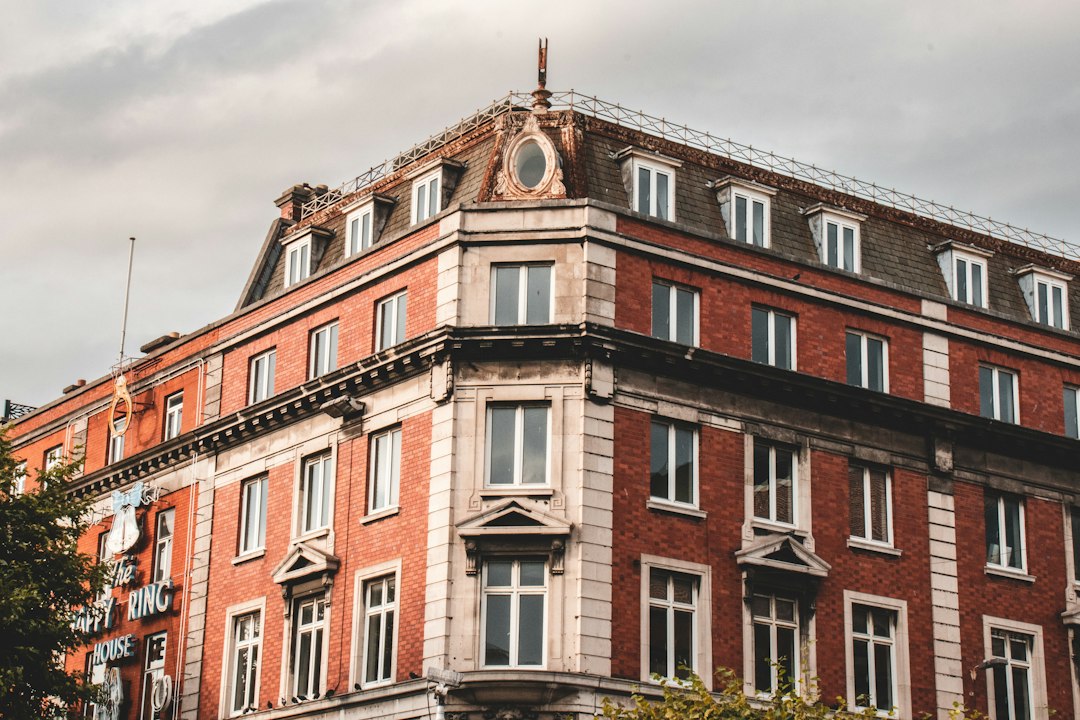
If you’ve ever visited Ireland — or are planning to — you’ve probably noticed something curious: street signs with names that seem impossible to pronounce, radio programmes in a language that isn’t English, and even supermarket products with writing that looks like it belongs to another world entirely. That language is Irish, also known as Irish Gaelic, and it tells a story far deeper than it might first appear.
A language with over a thousand years of history
Irish is one of the oldest languages in Europe. Spoken on the island for more than a millennium, it was the primary language of the Irish people until British colonisation gradually suppressed it over the centuries. During the Great Famine in the nineteenth century, the population — largely native speakers — was devastated. English became dominant, and Irish nearly disappeared altogether.
But Irish survived. And that survival was no accident.
The revival of a language as a political and cultural act
With Irish independence in 1922, the Irish language returned to the centre of national identity. Today, it is an official language of the country — alongside English — and its teaching is compulsory in public schools. There are regions known as the Gaeltacht, mainly along the western coast, where Irish is still the everyday language: in conversations at the pub, at Mass, and among children playing in the street.
The public broadcaster TG4 transmits its entire schedule in Irish, and digital platforms like Duolingo have made learning the language accessible to people all over the world.
What Gaelic has to do with the Irish soul
Understanding Irish is understanding something deeper about the Irish people: their resilience, their pride, their unique way of seeing the world. Many cultural concepts — like the famous craic, which captures the joy and pleasure of good company — only make complete sense when you understand the cultural weight the language carries.
Traditional Irish music, for example, is full of lyrics in Gaelic. When you attend a session in a pub in Dublin or Galway and hear someone sing in Irish, you’re witnessing something that has crossed centuries of resistance. It isn’t just entertainment — it’s living memory.
How many people speak Irish today?
According to official figures, around 1.8 million people in the Republic of Ireland claim some ability in the language. Of those, it’s estimated that between 70,000 and 100,000 speak Irish as their first language on a daily basis. That might sound modest, but for a language that was nearly eradicated, it carries enormous significance.
And interest is growing. Young Irish people are increasingly proud of their linguistic heritage, and there is a real revitalisation movement — especially in cities, where new spaces and communities are forming around the language.
What this means for those coming to study in Ireland
Coming to Ireland to study English isn’t just about learning a language. It’s about immersing yourself in a culture that values language in a profound and unique way. You’ll be surrounded by people who understand, from their own history, the transformative power of speaking — and preserving — a tongue.
If you’re curious about how live music shapes the Irish experience, you’ll quickly realise that culture here runs through everything — language included.
Ready to take the next step? Get in touch and find out how studying in Ireland with SEDA College can transform your future.