
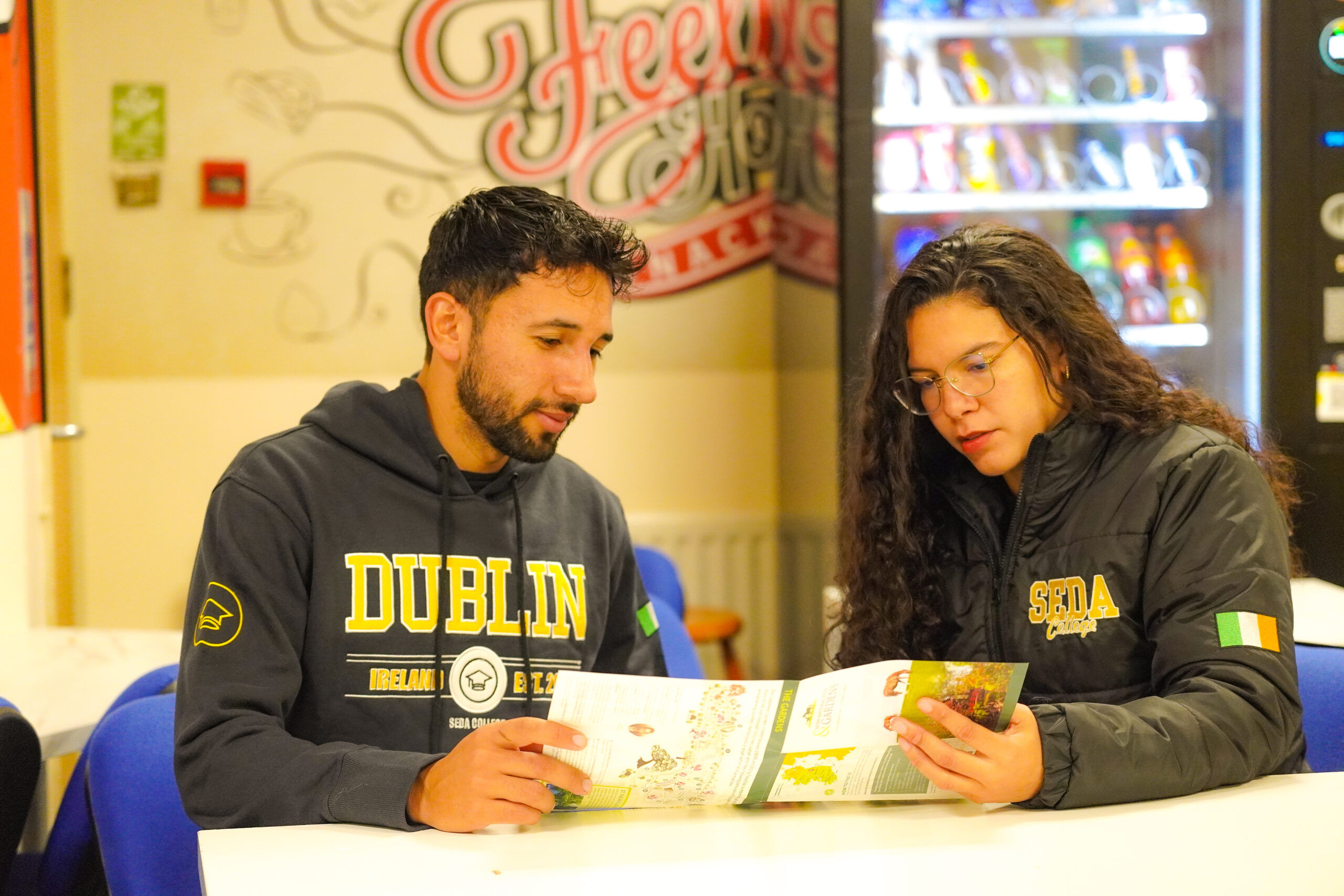
Who hasn’t felt their heart race before trying to speak English? Most students who begin a language course carry some level of linguistic anxiety—the fear of making mistakes, of being judged, or of not being able to express themselves as they would like.
This insecurity is more common than it seems and, often, is what prevents real progress in learning.
SEDA College understands that speaking a new language is, above all, an emotional exercise. Therefore, its methodology was designed to transform fear into confidence and shyness into natural communication.
A safe environment to make mistakes and learn
At SEDA, making mistakes is not a problem—it’s an essential part of the process. The classrooms are welcoming, dynamic, and collaborative environments where students feel free to try, practice, and develop.
Teachers are trained to create a positive atmosphere, encouraging dialogue and reinforcing achievements at every step. This approach reduces pressure and helps the student realize that making mistakes is part of learning, and that fluency comes from practice, not perfection.
With group activities, communicative games, and simulations of real-life situations, the student begins to realize that they can express themselves in English — even if they still make mistakes. And, from that point on, confidence grows naturally.
From theory to practice: living the language
SEDA believes that self-confidence is born from real-life experience. Therefore, the method goes beyond the book and grammar. The student is constantly challenged to use English outside the classroom — at cultural events, outings, debates, and daily interactions in Dublin.
By living the language, the student realizes that they can communicate in diverse situations: ordering coffee, talking to colleagues from other countries, shopping, resolving doubts, or even participating in interviews.
These concrete experiences are crucial to breaking the emotional block and showing that speaking English is possible — even without “knowing everything.” Gradually, fear gives way to satisfaction and self-confidence.
Emotional Support and Constant Progress
Another distinguishing feature of SEDA is the individualized follow-up. Teachers and the pedagogical team monitor the development of each student, identifying their insecurities and offering personalized strategies to overcome them.
The school also promotes self-development activities, such as communication workshops and positive feedback sessions, which help students perceive their own progress.
This continuous support creates a relationship of trust between student and teacher, making learning lighter and more enjoyable.
Speaking English is about rediscovering yourself
When students overcome anxiety and begin to express themselves confidently, they realize that learning English is also a journey of self-discovery.
Many report that they have become more extroverted, confident, and open to new experiences—inside and outside the classroom.
And it is precisely this personal transformation that makes SEDA a different school: it doesn’t just teach the language, it teaches students to believe in themselves.